 Iguazu Falls Boat Tour
Best Time to Visit Iguazu Falls
Last reviewed September 2026
The best time to visit Iguazu Falls is not a single month but a compromise between three things: how much water is coming down, how hot it is on the walkways, and how many people are on them. This page sets out the ten-year climate record for Puerto Iguazu month by month, explains the two opposite ways the river cancels a boat, and says which windows are steadiest. The tours themselves are compared on our Iguazu Falls boat tour page.
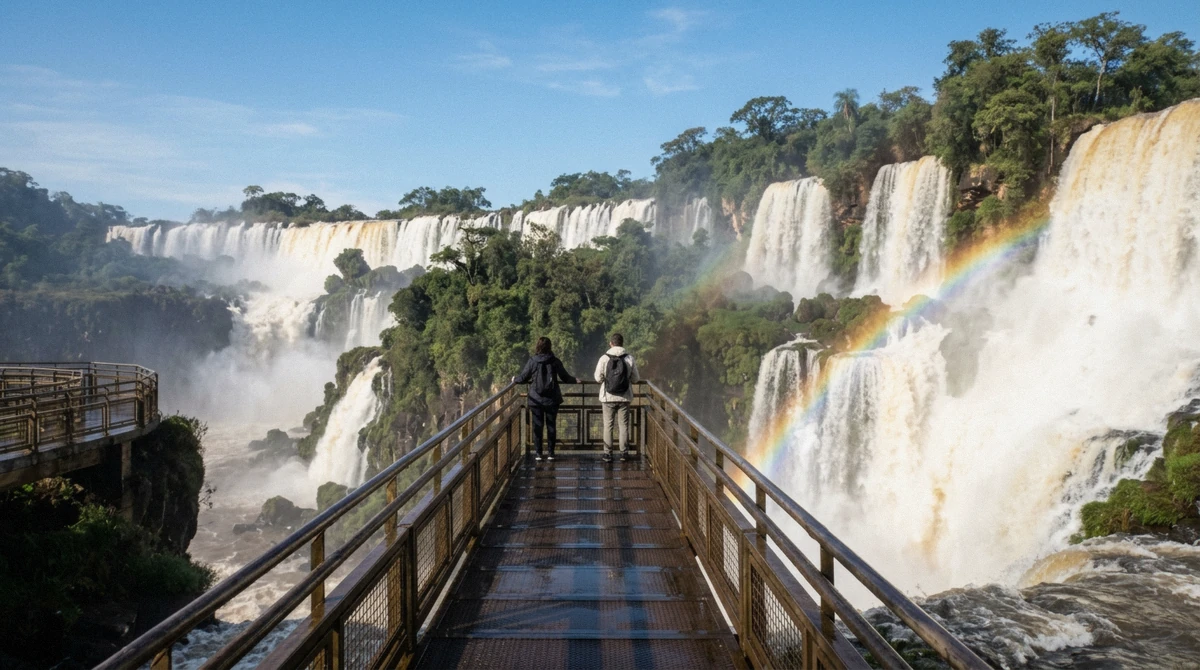
Quick answer The steadiest months for the boat, and the two ways the river ruins a day
March to May is the best compromise: the summer rains have filled the river, the heat has come off its peak and the school holidays on both sides of the border are over. The falls run all year and no month is closed, but the boat is the part that fails, and it fails in two opposite ways. In an extraordinary flood the nautical excursions are suspended and circuits can close, which is exactly what has happened this season on the Argentine side. In an extraordinary dry spell the rapids above Puerto Macuco stop being navigable and the boats stop for the opposite reason, as they did in March 2026. October is the wettest month in the local record at about 223 mm and August the driest at about 87 mm.
Key takeaways
- March to May is the steadiest window: strong flow, cooler air, no school holidays
- October is the wettest month on record here, about 223 mm; August the driest at about 87 mm
- December to February is hot, humid and busiest, with 30 to 31 C daily highs
- The boat stops in both flood and drought, and the refund covers the boat rather than the day
- The Devil's Throat catwalk is closed this season because of forecast high water
- Two days beat one whatever the month: the two-day itineraries give the river a second chance
Month by Month at Puerto Iguazu
The climate record, and what it does to the water
The figures below are the ERA5 reanalysis for Puerto Iguazu across 2015 to 2024, via Open-Meteo, which is the most consistent long series available for this specific point. Rainfall matters less for whether you get wet on the day and more for what the river does two or three days later, because the Iguazu drains a large basin upstream in Parana.
| Month | Mean daily high | Rainfall | What it means for the boat |
|---|---|---|---|
| January | 31.1 C (88 F) | 184 mm | Hot, humid, busy; heavy flow and short violent storms |
| February | 30.7 C (87 F) | 141 mm | Same heat, slightly drier; school holidays end late in the month |
| March | 29.9 C (86 F) | 146 mm | Heat easing, flow still high; one of the steadiest months |
| April | 27.7 C (82 F) | 107 mm | Comfortable walking, good flow, fewer crowds |
| May | 23.4 C (74 F) | 169 mm | Cool and wet; spray feels colder on the boat |
| June | 22.1 C (72 F) | 104 mm | Coolest month; low water is the risk, not rain |
| July | 22.4 C (72 F) | 104 mm | Dry and cool, winter holidays fill the parks mid-month |
| August | 24.7 C (76 F) | 87 mm | Driest month on record here; watch the river level |
| September | 27.5 C (82 F) | 110 mm | Warming up, spring rains beginning upstream |
| October | 28.5 C (83 F) | 223 mm | Wettest month on record; high water closes circuits |
| November | 29.8 C (86 F) | 153 mm | Hot and wet, flow strong |
| December | 30.8 C (87 F) | 181 mm | Peak heat and the start of the holiday crowds |
Reading the table for a boat day
Two columns matter. High rainfall upstream means volume, which is what makes the falls spectacular and, past a threshold, what suspends the boat and lifts walkways out of the water. Low rainfall over a long stretch means the opposite problem: a river too shallow for the run up from Puerto Macuco.
The middle of that range is where a boat day is most reliable, and in this record that is the autumn months of March, April and May, with a second workable window in September before the October peak.
The Four Practical Seasons
December to February: hot, wet, busy
Daily highs of 30 to 31 C with humidity to match, and the two biggest holiday markets in the region on their summer break at once. The falls are usually at full volume and the spray is welcome rather than cold.
What to plan around: crowds on the walkways from mid-morning, and the storms that arrive fast in the afternoon. Book the earliest boat departure of the day and treat the circuits as the afternoon activity.
March to May: the steady window
Flow remains high from the summer rains while the air drops from 30 C to the low twenties, and the school holidays on both sides are over. Reviewers consistently rate this stretch highest, and it is the window this site would pick given a free choice.
The caveat is May, which in the ten-year record is wetter than April and considerably cooler. Spray at 23 C is a different experience from spray at 30 C, and a dry change of clothes stops being optional.
June to August: cool, dry, and the low-water risk
The most comfortable months for walking, with highs in the low twenties and the least rain of the year. August is the driest month in the record at about 87 mm.
That dryness is the risk. A long dry winter drops the river far enough to suspend the boats, which is what happened in March 2026, and there is no advance warning that helps a traveller who booked three months earlier. Mid-July also brings the winter school holidays and a sharp jump in visitor numbers.
September to November: the water builds
Spring rain accumulates upstream and October is the wettest month on record here at about 223 mm. This is when the falls are at their most violent and when high water closes infrastructure.
The Argentine Devil's Throat circuit closed on 3 August 2026 precisely on those projections, with the walkway decking removed ahead of the forecast flooding, and it has not reopened. If you are travelling in this window, plan the Brazilian bank into your itinerary rather than assuming the Argentine catwalk will be open.
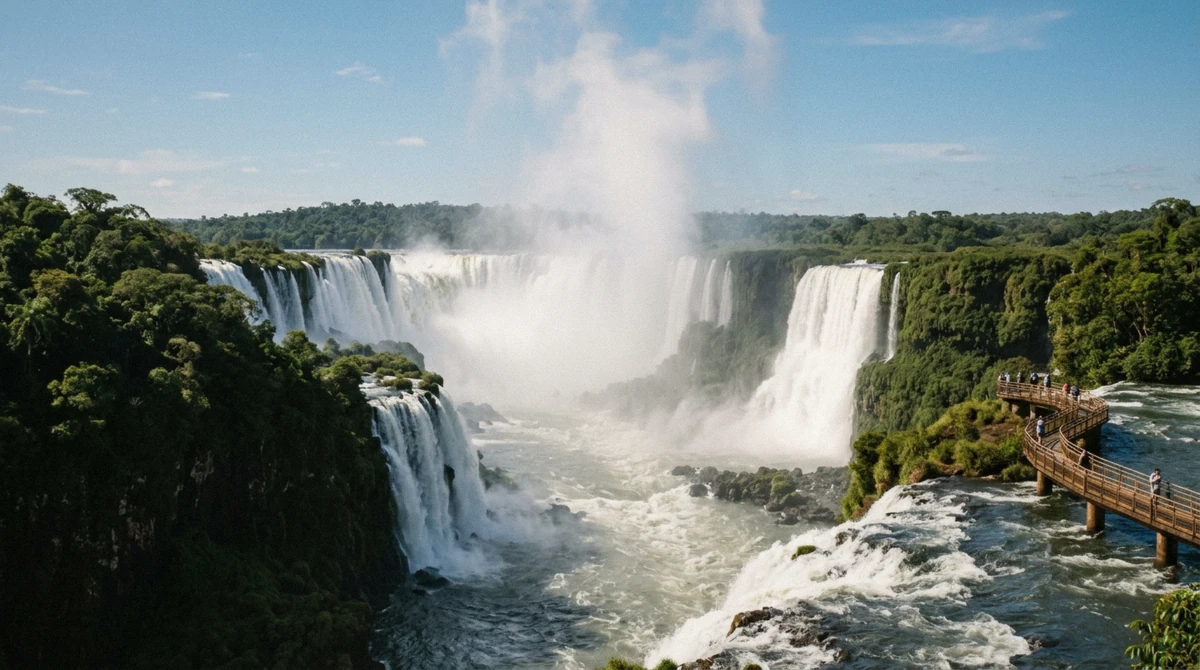
Pick a Month by What You Care About
If You want the falls at maximum volume
September to November. October averages about 223 mm, and the water shows it. Accept that high water is also what closes circuits.
If You want comfortable walking weather
June to August, with highs in the low twenties and the least rain of the year. Watch the river level, because a dry winter suspends the boats.
If You want the steadiest boat conditions
March to May. Strong flow left over from the summer rains, air off its peak, and no school holidays on either side.
If You are tied to the southern summer holidays
December to February works, but book the first boat departure of the day and treat the circuits as the afternoon.
If You have one day and cannot move it
Book the boat for the morning and keep free cancellation in reserve; the river decides late and the platform lets you decide the day before.
Crowds, Holidays and the Hour That Fixes Both
When the parks fill
Three peaks: the southern summer holidays from late December through January, Semana Santa, and the winter school holidays in mid-July. Add weekends year round on the Brazilian side, which draws domestic day visitors from a wide radius.
Within any day the pattern is identical on both banks. The first hour after opening is quiet, the walkways fill from mid-morning, and the coaches have gone by late afternoon.
| Peak | When | Where it bites hardest |
|---|---|---|
| Southern summer holidays | Late December to January | Both parks, all day; Argentine circuits worst |
| Semana Santa | Late March or April | Both parks, weekend-length |
| Winter school holidays | Mid-July | Brazilian side especially, plus domestic weekend traffic |
| Weekends, year round | Saturday and Sunday | Brazilian side, drawing day visitors from a wide radius |
| Daily peak | 10:00 to 15:00 | Walkways on both banks; the boat queues least |
The hour that fixes it
Arriving at opening is worth more than choosing the right month. On the Argentine side that means the first bus from the Puerto Iguazu terminal or a tour with an early confirmed pickup; on the Brazilian side it means being on the 120 bus before the coach traffic.
The boat is the exception: Macuco Safari runs every twenty minutes and never has a queue you cannot outwait, while Gran Aventura's morning departures are the ones that sell out first.
One more timing note that costs nothing: the last bus back from the Argentine park leaves in the early evening, so an independent visitor who lingers on the Lower Circuit pays for a taxi. Package tours carry their own return, which is part of what the twelve-hour listings are actually selling.
Booking Around a River You Cannot Predict
What cancels, and what you get back
Boat excursions are suspended in extraordinary flood and in extraordinary low water, and the operators say so plainly rather than promising conditions they do not control. On a packaged tour the refund covers the boat portion of the activity rather than the whole day, because the transfer, the guide and the circuits all still happened.
Every listing compared on this site cancels free up to 24 hours before the start, which is more generous than the operator counter's 72-hour rule. If the forecast turns ugly two days out, the platform booking is the one you can walk away from.
How to give the river two chances
Book the boat for your first full day rather than your last, and if you can stretch to it, split the parks across two days. Both concessionaires price the second day cheaply: Argentina sells a reduced second consecutive day, Brazil discounts a two-day ticket by 40 per cent.
The two-day private itineraries are built on exactly that logic, and the practical benefit has nothing to do with comfort: it is a second morning for the water to behave.
Paperwork that has nothing to do with the season
Two things do not change month by month and catch people out anyway. A passport is needed at both immigration posts if you visit the two parks, and citizens of the United States, Canada and Australia need a Brazilian e-visa obtained before travel, because it is not sold at the border. Argentina admits most Western nationalities visa-free for tourism.
Apply for the e-visa weeks ahead rather than the night before a crossing. A booking that survives a flood and a drought can still fail at an immigration desk, and no operator refunds that.
Best Time to Visit Iguazu Falls: Questions
What is the best month to visit Iguazu Falls?
March, April or September. Those months carry strong flow from the wet season without October's peak rainfall, the air has come off the summer highs of 30 to 31 C, and the school holidays on both sides of the border are over. August is the driest month in the local record and the most comfortable for walking, with the low-water risk attached.
When is Iguazu Falls at its fullest?
Typically from the summer rains through the spring build-up, with October the wettest month in the 2015 to 2024 record at about 223 mm. Volume peaks days after heavy rain upstream in Parana rather than on the day it falls, which is why a dry morning can still meet a river in flood.
When should you avoid Iguazu Falls?
Mid-December to January and mid-July if crowds bother you, because both are school holiday peaks in the region. Beyond that no month is a mistake, but September to November carries the highest chance of closures from high water, and a long dry winter carries the opposite risk of suspended boats.
Does rain ruin a visit to Iguazu Falls?
Not usually. You are going to get wet from spray regardless, the walkways stay open in normal rain, and heavy rain upstream is what makes the falls impressive. What ruins a boat day is an extreme in either direction: flood that suspends navigation or a drought that leaves the rapids too shallow.
How many days do you need at Iguazu Falls?
Two, one park a day. The Argentine circuits plus the boat fill a full day and the Brazilian trail plus Macuco Safari fill another, and the second day is discounted by both parks. The extra day also gives the river a second chance if the boat is off on your first morning.
Is the Devil's Throat open right now?
No. The Argentine Devil's Throat circuit has been closed since 3 August 2026 as a preventive measure against forecast flooding, with the walkway decking removed and no reopening date published. The Brazilian panorama walkway below the same gorge is open.