 Iguazu Falls Boat Tour
What to Wear on the Iguazu Falls Boat Ride
Last reviewed September 2026
Working out what to wear Iguazu Falls boat ride passengers need takes one assumption: you will be soaked to the skin, on purpose, more than once. This page covers the clothes that survive that, what belongs in the waterproof bag the crew hand out, what to leave in a locker and how the season changes the layer you put on afterwards. The listings themselves are compared on our Iguazu Falls boat tour page.
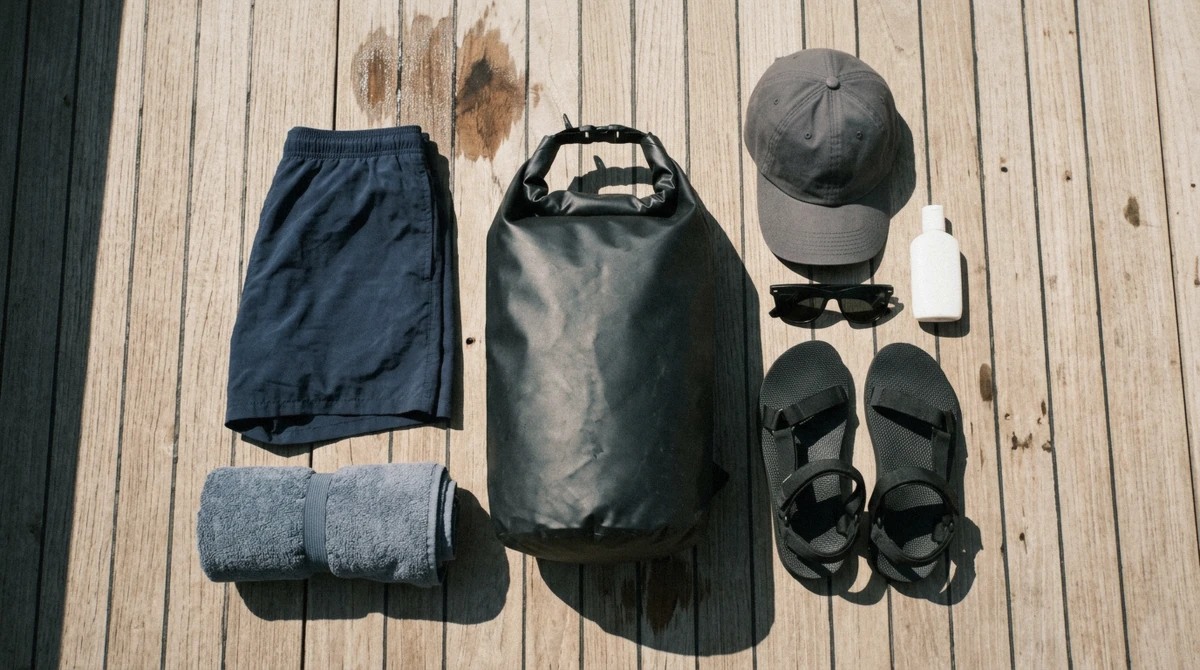
Quick answer What to wear, what goes in the dry bag, and what to leave at the hotel
Assume you will be soaked to the skin and dress for it: swimwear underneath, quick-drying clothes on top, sandals or shoes with a heel strap, and a full change of clothes in a bag for afterwards. The boat drives into falling water deliberately and does it more than once. Every operator hands out a large waterproof sack before boarding, and one Argentine listing counts a dry bag among its own inclusions, so phones, passports and camera bodies have somewhere to go. What does not work is a poncho, a cotton hoodie, loose sunglasses or anything held in your hand for the shot.
Key takeaways
- Swimwear under quick-dry clothes; cotton stays wet for hours
- Shoes with a strap: flip-flops leave your feet on the deck when the boat hits the water
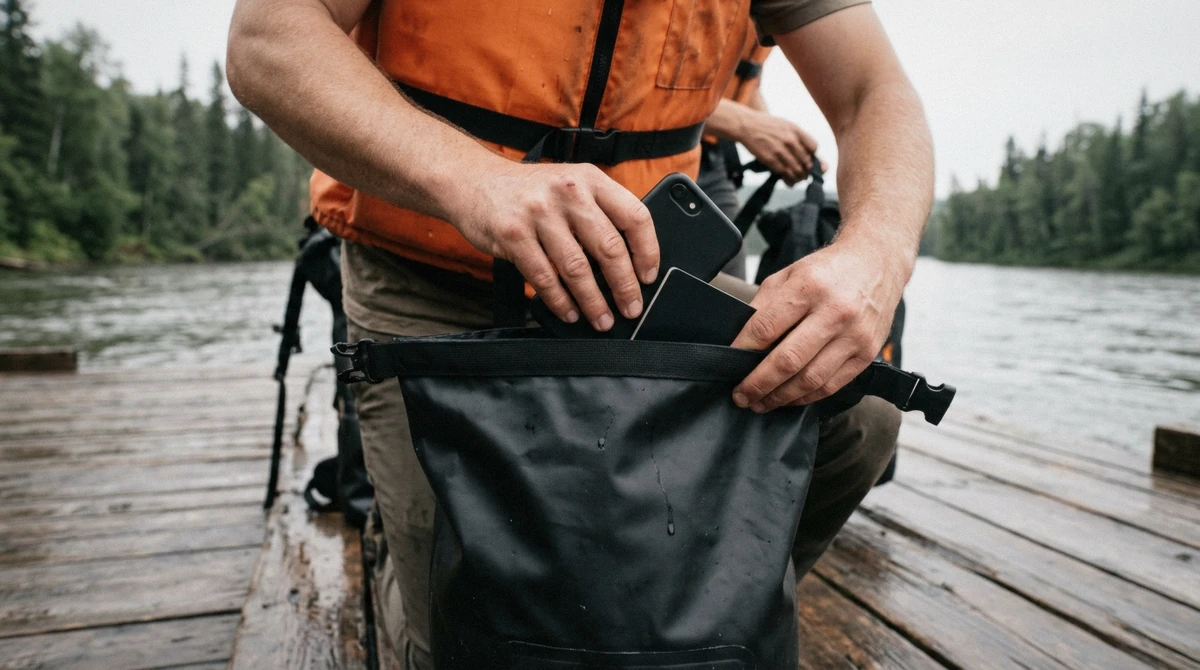
- Phone, passport and cash go in the waterproof sack the crew hand out at boarding
- Bring a full change of clothes and leave it in a locker, AR$13,500 to AR$21,000 on the Argentine side
- The Say Hueque listing includes a dry bag; most hand out a communal sack instead
- Ponchos are pointless on the boat and useful on the walkways afterwards
What to Wear on the Boat
The layers that work
Swimwear as a base layer solves the biggest problem, which is not being wet but staying wet in clothes that never dry. Over it, anything synthetic and light: running shorts, a technical t-shirt, a quick-dry dress. Everything you wear will be soaked within the first pass under the falls and will keep drying for the rest of the day as you walk the circuits.
Cotton is the mistake. A cotton t-shirt holds water for hours, a cotton hoodie holds it until evening, and jeans are heavy, cold and slow. In winter, when highs sit near 22 C, the difference between synthetic and cotton stops being comfort and starts being how long you shiver.
Shoes
Something that stays on your feet in moving water and on a wet metal deck. Sport sandals with a heel strap are ideal, closed shoes you accept will get wet are fine, and flip-flops are the classic error: they float off, and the walk out of the landing on the Argentine side is a 150-metre climb.
Whatever you wear on the boat, you then walk several kilometres of walkway in it, so it needs to be something you can spend a day in wet.
What to wear, by season
Iguazu is subtropical, and the season changes the layer you put on afterwards rather than the one you get wet in.
| Season | Typical high | On the boat | Afterwards |
|---|---|---|---|
| December to February | 30 to 31 C | Swimwear and light synthetics | Nothing extra; you dry in twenty minutes |
| March to May | 23 to 30 C | Same, plus a synthetic top | A dry t-shirt is enough most days |
| June to August | 22 to 25 C | Swimwear and quick-dry layers | A fleece or jacket in the bag, genuinely needed |
| September to November | 27 to 30 C | Light synthetics | A dry change and a poncho for the walkways |
The Dry Bag, and What Goes In It
What the crew give you
Every boat operator on both banks issues a large waterproof sack before boarding, and Iguazu Jungle lists it explicitly among the inclusions for Gran Aventura. It is communal on most trips: bags go into a pile, and you retrieve yours afterwards. One listing here, the Say Hueque boat and safari day, counts an individual waterproof dry bag among its own features, which is worth noting if you are carrying a camera you care about.
The rule is simple. If it must stay dry, it goes in before the boat moves, not when the water starts landing.
| Item | Where it goes | Why |
|---|---|---|
| Phone | Dry bag, or sealed pouch on a lanyard | A case is not enough against continuous spray |
| Passport or ID | Dry bag | It sets your ticket category at the park window |
| Cash | Dry bag | The Puerto Iguazu tourist tax is collected in cash |
| Camera body | Dry bag, or leave it at the hotel | There is one dry window, on the approach |
| Change of clothes | Locker at the entrance | Large bags are not allowed on the Argentine boat |
| Sunglasses and hat | Only with a strap | They leave the boat before you do |
The packing list
Everything below either goes in the dry bag or stays at the hotel. Nothing on this list is optional if you intend to have a working phone at lunch.
- Passport or ID: your document sets your park ticket category at the window
- Phone, in the sack or in a sealed pouch on a lanyard
- Cash for the Puerto Iguazu tourist tax and small purchases inside the parks
- A full change of clothes, including underwear and a second t-shirt
- A microfibre towel, which packs smaller and dries faster than a hotel one
- Sunscreen and insect repellent, applied before boarding rather than after
- A hat with a strap, or no hat at all
- Sunglasses you are willing to lose, or none
- A plastic bag for the wet clothes on the way back
What to leave behind
Large bags are not allowed on the Argentine boat, which is why the lockers exist: AR$21,000 for a large one and AR$13,500 for a small one at the Argentine park. A wheeled suitcase brought straight from a morning flight is the single most common logistical mistake here.
Also leave the good camera unless it is genuinely waterproof. The dry window on the boat is the upstream approach, before the crew turn the bow into the water, and after that no lens stays clear for more than a second.
How Wet You Actually Get
Completely, and more than once
Both concessionaires design the run so the boat sits under falling water, and the Argentine operator calls the moment the bautismo, which tells you how central it is to the product. Passengers describe laughing helplessly and seeing nothing; reviewers who arrive expecting a scenic cruise are the ones who complain, and they are complaining about the wrong tour.
The soaking lasts a few minutes. The consequences last the rest of the day, which is why the change of clothes matters more than the poncho.
On the walkways, it is different
Spray on the circuits is constant but mild, except at the Brazilian walkway below the gorge, where it lands hard enough that most visitors arrive at the lift damp. A light poncho is genuinely useful there and useless on the boat.
That asymmetry is the practical point of this page: two different kinds of wet, needing two different responses, on the same day out.
Cameras, phones and the one dry window
There is a stretch on both boats before the run, upstream on the Argentine side and on the approach in Brazil, when the falls are in front of you and nothing is landing on the lens. Take the photograph there.
After that a sealed pouch on a lanyard is the only realistic camera. Waterproof action cameras work; phones in cases do not, because the problem is not immersion but a continuous wall of spray and a boat that does not stop.
Health, Sun and the Vaccination Question
Do you need a yellow fever vaccination for Iguazu Falls
It is recommended rather than required. Misiones in Argentina and Parana in Brazil sit in the region where public health authorities, including the United States CDC, advise yellow fever vaccination for travellers, and the advice applies even to a short one or two day visit. It is not an entry requirement for the falls themselves for most nationalities.
The timing is the practical part: the vaccine takes about ten days to take effect, so it is a decision for the month before the trip rather than the week. A certificate can be asked for by other countries in the region if you continue on after visiting Brazil, which is the more common reason travellers end up needing the card. Speak to a travel clinic rather than taking a website's word for your own medical situation.
Sun, insects and the things that spoil a wet day
Sunburn is the injury people actually collect here. Wet skin on an open boat under a subtropical sun burns faster than dry skin on a walkway, and the spray washes sunscreen off. Apply before boarding, reapply after you dry, and treat a hat with a strap as equipment rather than an accessory.
Insect repellent belongs in the bag for the forest sections rather than the boat. Both parks are inside protected rainforest, mosquitoes appear on the shaded trails, and the coatis that scavenge along the walkways are wild animals that bite when fed. Feeding them is prohibited on both banks.
What to Wear on the Iguazu Boat Ride: Questions
What should you wear on the Iguazu Falls boat ride?
Swimwear under quick-drying synthetic clothes, and shoes or sandals with a heel strap. You will be soaked to the skin, so cotton and denim are the things to avoid. Bring a full change of clothes for afterwards, because the rest of the day is spent walking several kilometres of walkway.
Do you need a poncho for the boat?
No. A poncho does nothing against a boat driving into a waterfall, and it flaps in the way. Ponchos earn their place on the walkways afterwards, particularly on the Brazilian walkway below the Garganta, where the spray is constant.
Where do you put your phone during the boat ride?
In the large waterproof sack the crew hand out before boarding, or in a sealed pouch on a lanyard if you want to film. Iguazu Jungle lists the bag among its inclusions, and one listing here provides an individual dry bag rather than a communal sack.
Can you leave luggage at Iguazu Falls?
Yes, in lockers at the Argentine park, priced at AR$21,000 for a large one and AR$13,500 for a small one. Large bags are not allowed on the boat, so a suitcase brought from a morning flight has to go somewhere before you board.
What should you not bring on the Iguazu boat?
Flip-flops, a non-waterproof camera you care about, loose sunglasses, a hat without a strap, anything paper and any bag you cannot seal. Everything in that list either floats away or arrives ruined.
How long does it take to dry off after the boat?
In summer, with highs near 31 C, twenty minutes on the walkways. In winter, when highs sit near 22 C, considerably longer, which is when a dry change of clothes stops being a comfort and becomes the reason the rest of the day works.
Do I need a yellow fever vaccination for Iguazu Falls?
It is recommended, not required. Public health authorities including the CDC advise yellow fever vaccination for travellers to Misiones and Parana, even for a one or two day visit, and the vaccine needs about ten days to take effect. Proof can be requested by other countries in the region afterwards. Take medical advice from a travel clinic rather than a travel page.